Author: Xabi Otero
•2:17 PM

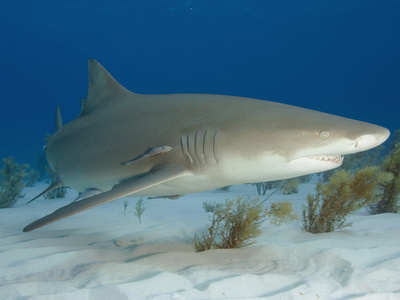
Sharks are creatures that have scared thousands of generations of human population because they're considered a really dangerous species. However, few people know (and scientists don't fully understand) a process called tonic immobility (also known as thanatosis or cataleptic state).

This concept refers to the natural state of paralysis sharks enter under various stimuli, during which they can mimic lifelessness for up to 15 minutes. The shark will then relax, its dorsal fins will straighten, its breathing will become slow and even and it may be touched or estimulated with virtually no response.


Sharks display tonic immobility as a response to only one well-documented stimulus: being inverted. Other species of shark (e.g. lemon, reef and tiger sharks) also display tonic immobility when their snout is rubbed, as their sensory organs termed the ampullae of Lorenzini are overestimulated. Even exhausting the shark has been proved to initiate this peculiar mode. After behavioural controls are established, a successful chemical repellent will awaken a shark from this tonic state and will simply swim away with no apparent harm done. This behaviour has been registered only in several shark species: lemon (Negaprion brevirostris), sandbar (Carcharhinus plumbeus), tiger (Galaeocerdo cuvier), blue (Prionace glauca), nurse (Ginglymostoma cirratum), great whites (Carcharodon carcharias) and black-tip sharks (Carcharhinus limbatus).


Negaprion brevirostris
Prionace glauca


Galaeocerdo cuvier
Carcharhinus plumbeus
Ginglymostoma cirratum


Carcharhinus limbatus


Carcharodon carcharias
 A very interesting fact about this particular behaviour is that female sharks are more responsive to this status than in male sharks. The most plausible explanation for this is that females try to deter unwanted attention from amorous males. In addition, both males and females will display this apparently magical behaviour to shake off their predators so that as soon as the latter lose their concentration they can swim away. However, it has also been found out that some animals such as orcas force sharks into the inverted position to facilitate their predation. 


This behaviour is highly interesting for scientists, as it provides them a unique opportunity to study certain shark behaviours and physiology


Above, you can watch a video of a good example of tonic immobilisation. Totally fascinating, isn't it?


SOURCES:

http://www.theepochtimes.com/n2/science/tonic-immobility-shark-whisperers-powers-of-hypnosis-video-63137.html
http://www.ehow.com/info_8722758_causes-tonic-immobility-sharks.html#ixzz2LQxNKRPd
http://www.absoluteastronomy.com/topics/Tonic_immobility  (this link will give you examples of tonic immobility in other animals).
DOCUMENTARY: BBC Human planet. 1: The oceans. Minutes 27.30 to 32.45.
Author: Xabi Otero
•4:52 PM
Basándome en el libro "The last wolf", de Jim Crumley, me gustaría escribir unos párrafos en defensa de la que es mi especie favorita en la tierra: el lobo. En realidad, este animal ha sido perseguido y matado brutalmente en numerosos lugares del planeta en respuesta a un sentimiento de odio extendido entre la humanidad.


Fuente: http://howlingforjustice.files.wordpress.com/2011/06/winter-wolf-all-about-wolves.jpg

Sin embargo, este sentimiento no ha existido desde siempre.

A) LGM - Prehistoria.

Si nos remontamos al Pleistoceno, los lobos eran los mamíferos más comunes, y fueron los primeros en ser domesticados. Durante el Último Máximo Glaciar (LGM, hace unos 20.000 años), el nivel del mar había descendido, lo que hizo emerger una pasarela terrestre entre Asia y América del Norte en lo que hoy es el estrecho de Bering (véase Figura 1). Los grandes herbívoros de América se aprovecharon de esta conexión y la cruzaron, encontrando al otro lado ricas áreas de pasto. Los lobos persiguieron a estos herbívoros y los empujaron gradualmente hacia el oeste, y debido a ello los caballos alcanzaron las partes más occidentales de Europa.

Figura 1: El Estrecho de Bering durante el LGM. Las áreas verdes representan las tierras emergidas.
Fuente: http://www.geotimes.org/jan03/feature2_topLGM.jpg

Después de la glaciación, Canis lupus (el lobo) y Homo sapiens pudieron adaptarse a la nueva situación con relativa facilidad. A pesar de que ambos fueran cazadores, los lobos eran mejores, por lo que los humanos aprendieron de los lobos a cazar de un modo más eficaz, llegando a tratar al lobo como a un profesor. Evidencia de esto aparece en pinturas, grabados, escrituras y en el boca a boca.


B) Comienzo de las civilizaciones humanas.

La relación entre humanos y lobos se deterioró cuando los primeros se volvieron sedentarios. Con la invención del fuego, la humanidad podía crear praderas donde antes había bosques (destruyendo así el hábitat de los lobos) para que los animales domésticos pudieran pastar. Por consiguiente, proteger al ganado de los lobos se volvió necesario, lo que enfrentaría a la raza humana con los lobos.

Sin embargo, el mito de Rómulo y Remo, los fundadores de Roma que fueron alimentados por una loba y quienes trajeron la paz con las Sabinas (cuyo animal de culto era el lobo) devolvió al lobo su anterior elevado estatus.


C) Cristianismo y la Edad Media.

Cuando se estableció el cristianismo, puesto que consideraba al Señor un buen pastor, los lobos que se alimentaban del ganado eran la misma personificación del Diablo. En consecuencia, se formularon centenas de mitos que hablaban sobre feroces lobos grandes y negros que atacaban a gente corriente, lo cual alimentó el odio hacia esta especie, odio que aún sigue muy arraigado en la población humana. En este libro, el autor trata de descreditar algunos de estos mitos:

- En primer lugar, deberíamos tener en cuenta que los mitos cambian considerable y rápidamente con el paso de los años, y tienden pro lo general a exagerar progresivamente la realidad. Por ejemplo, los lobos son descritos como criaturas más grandes de lo que en realidad son (véase Figura 2) y la mayoría de las personas que nunca han visto un lobo en directo son de esta opinión. Además, ningún lobo negro ha sido encontrado en Europa, mientras que muchas historias contadas en Escocia describen lobos feroces de color negro.


Figura 2: Lobos europeos cazando un ciervo. Reparad en la diferencia de altura.
Fuente: http://www-tc.pbs.org/wnet/nature/files/2008/08/610_ag_graywolf1.jpg

- En segundo lugar, el ciervo, el reno, el alce, la cabra y el jabalí salvaje son las presas preferidas de los lobos, lo cual significa que los lobos cazan ganado solamente en caso de que los animales restantes hayan desaparecido. Por ello, si los lobos empezaron a cazar animales domésticos fue porque los humanos estaban también cazando los animales anteriormente mencionados.

- Por si esto fuera poco, dichas historias contadas en Escocia contenían aspectos increíbles y sobrenaturales (véase Figura 3): siempre había un héroe alto y fuerte, quien por cierto, guardaba cierta similitud con William Wallace; esto se explica porque los victorianos escucharon estas historias cuando estaban construyendo el monumento en honor a William Wallace en Stirling. Este personaje heroico se peleaba a fondo con un lobo muy grande y fiero que ponía su vida en peligro, pero al final, algo heroico occurría para dar una muerte increíble a la criatura.

Figura 3: relato galés de Gelert. Llywelyn the Great, mató a su perro fiel Gelert después de encontrarlo cubierto de sangre que creyó procedía de su hijo. Sólo después repara en que su hijo está todavía vivo, y lo que realmente había occurrido era que su perro había estado peleando con un lobo que Gelert había matado para poder defender al joven príncipe.

Fuente: http://upload.wikimedia.org/wikipedia/commons/e/e0/Gelert.jpg

- Estas características son mucho más comunes en los relatos conocidos como el síndrome del último lobo. Este concepto se refiere al grado de excitación en los humanos para ser aquel que ejecutara al último lobo del país (un ejemplo de esto se muestra en la Figura 4). Por lo tanto, numerosos relatos narraban el asesinato de muchos últimos lobos en diferentes partes del país, los cuales además contenían los mismos rasgos: siempre había una gran loba protegiendo a su camada, con unas características aún más fieras y escalofriantes y con la cual el héroe mantenía una batalla altamente peligrosa hasta que en un momento, él demostraba sus habilidad y su superioridad en un último movimiento que daba muerte a la gran bestia. Las semejanzas entre todas estas historias nos hace poner en tela de cuestión su grado de fiabilidad. Lo más probable es que no sean verdad y que el último lobo muriera de una simple muerte; de hecho, en una localidad se asegura que un ama de casa mató al último lobo con una sartén.


Figura 4: Memorial al último lobo in Sutherland, Escocia.
Fuente: http://www.landsendjohnogroats.info/images/northern_scotland/570/67_helmsdale6.jpg

- Por último, los apellidos de guerreros y reyes de gran renombre que contienen la palabra lobo evidencian el alto estatus concedido por esta especie. Dichos apellidos son Ethelwulf (El Noble Lobo), Berthwulf (El Ilustre Lobo), Eadwulf (El Próspero Lobo) y Ealdwolf (El Viejo Lobo).


D) Actualidad.

Aún durante el siglo XX y XXI, podemos observar numerosos prejuicios hacia el lobo. A modo de ejemplo, os dejo un extracto de un libro de texto para niños publicado en Inglaterra durante el siglo XIX:

"Un aspecto salvaje, un aullido escalofriante, un hedor insorportable, hábitos fieros, y una disposición maligna son las principales características en su naturaleza, lo que lo convierte en peligroso y detestado mientras está vivo e inútil cuando muere. Por esta razón, cazar lobos es una diversión muy popular entre los nobles de muchos países; y es una especie de caza por la cual nadie debería sonrojarse o soltar ni una mísera lágrima" 

Sin embargo, el lobo juega un papel primordial en los ecosistemas en los que habita. Es más, su exterminación en Escocia causó degradación paisajística, ya que la falta de este depredador repercutió en una reproducción sin control de los herbívoros, lo cual impidió que los bosques se desarrollaran libremente y en última instancia, trajo consigo degradación forestal.

Afortunadamente, en muchos sitios ya se han percatado de lo necesarios que los lobos son en los ecosistemas y han realizado grandes esfuerzos por reintroducirlos en sus hábitats. Éste es el caso de Yellowstone (véase Figura 5), donde la llegada de los lobos se llevó a cabo gracias a la tribu Nez Perce. Su aparición provocó la recuperación del sauce, que a su vez atrajo a los castores que crearon ecosistemas acuáticos donde reptiles, anfibios, alces y otros animales podían prosperar. Este fenómeno es conocido ecológicamente como cascada trófica, desencadenada por un único animal.


Figura 5: Manada de lobos en Yellowstone, reintroducidos gracias a la tribu Nez Perce.
Fuente: http://www.wolftracker.com/TheWildSide/nez%20perce%20april%2012%20a.jpg

E) CONCLUSIÓN

Me gustaría resumir algunos de los puntos comentados anteriormente para finalizar este texto:

- Primeramente, mientras que el humano se comportaba como cualquier otro animal, todas las criaturas eran consideradas nuestros pares (incluso se solía rezar antes de cazar animales para invocar clemencia por los siguientes actos), excepto el lobo que, siendo mejor cazando, obtenía un estatus superior y era tratado como un profesor.

- Fue solamente cuando la humanidad se volvió sedentaria, y posteriormente empeoró con la llegada del cristianismo, cuando el lobo empezó siendo despreciado y eprseguido, ya que suponía una amenaza para el ganado. Aun así, ya hemos comentado anteriormente que los animales domésticos no son las presas preferidas de los lobos; éstas son otros animales (ciervos, alces...) y solamente van tras el ganado si estos animales desaparecen.

- Mitos sobre lobos que trataban de matar gente común fueron muy numerosos durante el medievo y todos ellos exageraban los rasgos del animal para hacerlo más agresivo y fiero para los humanos. En consecuencia, los seres humanos estaban aterrorizados cuando oían a los lobos aullar, pues creían que el lobo se hallaba cazando cerca, si bien podía estar hasta a 7,5 kilómetros de distancia; además, el aullido es un síntoma de comunicación, ya que los lobos cazan en silencio. Se pensaba que los lobos aullaban a la Luna, pero eso no es cierto; lo único que es verdad es que los lobos prefieren cazar cuando hay luna llena, debido a que entonces hay más luz.

- Hay todavía gran parte de la población que mantiene estas creencias medievales acerca de este animal. La gente los teme, a pesar de que los lobos raramente matan a humanos (como hemos dicho, prefieren ciertos animales salvajes, y después ganado); de hecho, más personas mueren de ataques de perros domésticos que de lobos.

- Su reintroducción, aunque lentamente, está teniendo lugar, sobre todo gracias a tribus tales como los Nez Perce (véase Figura 6). Es curioso comprobar que cuanto más cerca vive una tribu de los lobos, más les gustan, estando alejados de todos estos falsos mitos tan arraigados en las culturas urbanas. Asimismo, se ha probado que su restauración ha sido beneficiosa para el ecosistema ya que cazan herbívoros que de lo contrario, obstaculizarían el libre desarollo de los bosques.


 Figura 6: mujer Nez Perce dibujada junto a un lobo.
Fuente: http://photos.igougo.com/photos/journal/pref/Nez_Perce_woman_and_pet_wolf_prefRes.jpg

Como conclusión, aunque creo que el autor describe a los lobos como si fueran gatitos inofensivos, básicamente estoy de acuerdo con él y comparto sus opiniones sobre la urgente necesidad de devolverlos a los hábitats que antaño ocuparon. Por supuesto, esto podrías uponer un problema para los ganaderos o pastores, pero también deberíamos pensar sobre los beneficios ecológicos que su introducción podría traer a nuestros cada vez más degradados paisajes.


BIBLIOGRAFÍA

CRUMLEY, J. (2010). The last wolf.
Author: Xabi Otero
•5:20 PM
Jim Crumley-k idatzitako "The last wolf" liburuan oinarrituta, otsoak defendatzeko paragrafo batzuk idaztea gustatuko litzaidake. Izan ere, espezie hau jarraituta eta modu basatian akabatuta izan da planetako leku anitzetan gizakion beraiekiko gorrotoa zela eta.

Iturria: http://howlingforjustice.files.wordpress.com/2011/06/winter-wolf-all-about-wolves.jpg


Hala ere, setimendu hau ez da betidanik egon.


A) LGM - Historiaurrea.

Pleistozenora bueltatzen bagara, otsoak ugaztun ugarienak ziren eta etxekotu ziren lehenengoak izan ziren. Azken Maximo Glaziarrean (LGM, duela 20.000 bat urte), itsas maila beherago zegoen, Asia eta Ipar-Amerikaren arteko lur-zubi bat azaleratu egin zuena gaur egungo Bering itsasartean (ikus Irudi 1). Ipar-Amerikako belarjaleak lotura honetaz baliatu ziren eta gurutzatutakoan, oso aberatsak ziren belarguneekin egin zuten topo. Otsoek belarjale hauek jarraitu eta gradualki mendebalderantz eraman zituzten, eta horregatik zaldiak Europako Mendebaldera iritsi ziren.


Irudi 1: Bering Itsasartea LGM garaian. Gune berdeek azaleratutako lurrak irudikatzen dituzte.
Iturri: http://www.geotimes.org/jan03/feature2_topLGM.jpg

Glaziazioaren ondoren, Canis lupus (otsoak) eta Homo sapiens aise egokitu ziren inguru berrira. Biok ehiztariak izanagatik, otsoak hobeak ziren, beraz gizakiak otsoetatik ikasi zuen era eraginkorragoan ehiztatzen eta ondorioz, otsoa irakasle kontsideratzen zen. Honen ebidentziak aspaldiko margolanetan, grabatuetan, idazlanetan eta ahoz ahoko istorioetan gelditzen da.


B) Giza-zibilizazioen hasiera.

Bi espezieen arteko harremana gizakiak sedentario bihurtu zirenean okertu ziren zeharo. Suaren asmakizunarekin batera, gure espeziea basoak ordezkatzen zituzten belardiak sortzeko gai zen (otsoen bizilekuak suntsituz) etxekotutako animaliek bazka zezaten. Dena den, azienda otsoetatik babesteko premiak azaleratu egin ziren, gizakiak eta otsoak elkarren kontra jarriko zituena.

Hala eta guztiz ere, Romulo eta Remo-ren mitoak, hots, otso batek elikatutako Erromako fundatzaileak, zeintzuk geroago Sabinekiko bakea ekarri zuten (hauen kulto-animalia otsoa zen) otsoek aurretik zuten goi-estatusera berreskurarazi zituen.


C) Kristautasuna eta Erdi Aroa.

Kristautasuna etorri zenean, Jainkoa artzain ontzat hartzen zuenez, ganaduaz elikatzen ziren otsoak Deabruaren pertsonifikazioa bera ziren. Hori dela medio, jende arrunta erasotzen zuten otso itzel eta beltz-beltzei buruzko mito ugari formulatu ziren eta horrek Canis lupus-ekiko gorrotoa ekarri zuen progresiboki, egun oraindik ere populazioan erabat sustraituta dagoena. Liburu honetan, egileak mito horien egiazkotasuna kolokan jartzen du:

- Lehenik eta behin, mitoak denboraren poderioz izugarri azkar aldatzen direla aintzar hartu behar genuke, normalean errealitatea gradualki handituz. Esate baterako, otsoak duten altuera areagotu egiten zen (Ikus Irudi 2) eta inoiz otso bat ikusi ez duten pertsona gehienek otsoak handiagoak direlakoan daude. Gainera, otso beltzik ez da Europan existitzen, Eskoziako istorio askok otso beltz eta basatiak deskribatzen dituzten arren.


Irudi 2: Otso europarrak oreina harrapatzen. Altuera ezberdinketari erreparatu iezaiozue.
Iturria: http://www-tc.pbs.org/wnet/nature/files/2008/08/610_ag_graywolf1.jpg

- Bigarrenik, otsoen ohizko harrapakinak oreina, elur-oreina, altzea, ahuntza eta basurdea dira. Honek esan nahi du otsoek abere domestikoak harrapatuko dituzte bakarrik aurreko animaliak desagertuz gero. Hortaz, otsoak abereak ehizatzen hasi ziren gizakiok aipatutako espezie horiek ere harrapatzen zituztelako.

- Bestalde, Eskozian kontatzen ziren otsoei buruzko istorioek sinesgaitzak ziren aspektu pila bat sartzen zituzten (Ikus Irudi 3): beti heroi indartsu eta handia ageri ohi da, William Wallace-n antza izaten duena; kasualitatez, viktoriarrek Stirling-en dagoen William Wallace-n omenezko monumentua eraikitzen ari zenean entzun baitzituzten istorio hauek. Heroi honek ikaragarrizko borroka mantentzen zuen piztiarekin, bere bizitza arriskuan jarriz, baina azken momentuan heroiari zerbait bururatzen zitzaion piztiari kolpe ikaragarri eta erabakitzailea emanez.


Irudi 3: Galeseko Gelert-en mitoa. Llywelyn the Great-ek bere txakur fidela Gelert akabatu zuen animaliari odola zeriola aurkitu zuenean, bere haurrarena zelakoan egonda. Bakarrik geroago ikusten du bere semea oraindik ere bizirik zegoela, bere txakurra otso batekin borrokatzen egon baitzen, piztia basatia hil eginez printze gaztea defendatzeko asmoz.

Iturria: http://upload.wikimedia.org/wikipedia/commons/e/e0/Gelert.jpg

- Ezaugarri ikaragarri hauek are arruntagoak dira azken-otsoaren sindromea deritzon istorioetan. Sindrome honek erreferentzia egiten dio azken otsoa akabatzeko ohorea zela eta gure espezieak sentitzen zuen emozioari (adibide bat Irudi 4n daukagu). Horren ondorioz, azken otsoaren hilketa kontatzen zuten istorio ugari kontatzen ziren Eskoziako leku guztietan, antzeko ezaugarriak zituztenak: bere kumeak defendatzen ari zen otseme handi bat agertzen zen, inoiz baino handiago eta beldurgarriagoa zena, eta heroiak oso borroka arriskutsua izaten zuen harik eta heroiak bere trebetasunak eta nagusitasuna erakusteko aukera izaten zuen arte, otsotzarra heriotzara bidaliz. Istorio guzti hauen antzekotasunak kolokan jartzen du hauen egiazkotasun maila. Litekeena da egiazkoak ez izatea, zeren eta ziur aski azken otsoak heriotz sinple bat jasan baitzuen; izan ere, leku batean aldarrikatzen da azken otsoa etxeko andre batek hil zuela zartagin baten bitartez.

Irudi 4: Eskoziako Sutherland-en hildako azken otsoa gogoratzeko memoriala. 
Iturria: http://www.landsendjohnogroats.info/images/northern_scotland/570/67_helmsdale6.jpg

- Azkenik, "otsoa" hitza daramaten soldadu eta errege garrantzitsuen abizenak otsoak ekartzen zuen prestigioaren seinalea da zalantza barik. Honelako abizenak Ethelwulf (Otso Noblea), Berthwulf (Otso Ilustratua), Wadwulf (Otso Arrakastatsua) eta Ealdwolf (Otso Zaharra) ditugu.


D) Gaur egun.

Oraindik ere azken bi mendeotan ikus ditzakegu otsoarekiko aurreiritzi negatibo anitz. Esaterako, XIX. mendeko umeentzako testuliburu baten zati bat utziko dizuet:

"Itxura basatia, ulu beldurgarria, kirats jasanezina, ohitura izugarriak, eta disposizio gaiztoa bere naturaren ezaugarri nagusiak dira, zeintzuk arriskutsua eta gorrotatua bihurtzen duten bizi den bitartean, eta alferrikakoa hilik dagoenean. Hau dela kausa, otsoa ehiztatzea nobleen arteko denbora-pasa dibertigarriena da herrialde batzuetan; eta bere ehizaren ondorioz gizakirik ez da damutu behar, ezta malko bat bota behar ere".

Halere, otsoa bizi den lekuetan premiazko garrantzia duenik ezin da ukatu. Izan ere, Eskozian beraien exterminazioak paisaiaren degradazioa ekarri zuen, harrapakinaren faltaren ondorioz belarjaleak inolako kontrolik gabe ugaldu baitziren, basoen garapena oztopatuz eta hauen degradazioa azeleratuz.

Zorionez, leku batzuetan, otsoak ekosistemetan funtsezkoak direla ohartu dira eta ahalegin handiak egin dituzte beraien habitatetara berriro sartzeko. Hau Yellowstone-n kasua dugu (Ikus Irudi 5), non otsoen etorria burutu zen Nez Perce tribuari esker. Beraiek etorritakoan, sahatsaren berreskurapena gertatu zen, kastorea erakarri zuena; hauek, aldi berean, ur-ekosistemak sortu zituzten, non narrastiek, anfibioek, altzeak eta bestelako animaliek garatzerik zuten. Fenomeno hau ur-jauzi trofiko izenarekin ezagutzen da, kasu honetan animalia bakarrak bultzatutakoa.


Irudi 5: Otso-taldea Yellowstone-n bizitzen, Nez Perce tribuari esker burututako proiektua izan dena.
Iturria: http://www.wolftracker.com/TheWildSide/nez%20perce%20april%2012%20a.jpg

E) ONDORIOA.

Testu hau amaitzeko, komentatutako puntu batzuk laburtzea gustatuko litzaidake:

- Lehenik, animalien antzeko jarrera genuen bitartean, gure parekotzat hartzen genituen animalia guztiak (otoitz ere egiten zen segidan egindako ekintzen barkamena eskatzeko), otsoa izan ezik, zein ehiztatzen hobea izanik, maila gorenagoa lortzen zuen eta irakasle kontsideratuta zegoen.

- Gizakia sedentario bihurtu zenean eta Kristautasunaren etorrerarekin hasi zen otsoa mespretxatuta eta jarraitua izaten, abereentzako mehatxua suposatzen zuen eta. Hala ere, lehen esan dugun lez, otsoek bestelako animaliak harrapatu nahiago dituzte (oreina, altzea...) eta azienda aukeratzen dute aurreko animaliak behin desagertuta daudenean.

- Erdi Aroan, pertsona arruntak hiltzen saiatzen ari ziren otsoei buruzko mitoak oso ugariak ziren eta guztiek otsoaren ezaugarriak areagotzen zituzten gizakian aurkako basatiago eta agresiboagoa bihurtzeko. Beraz, jendea ikaratuta zegoen otsoak uluka zeudenean, oso gertu zeudela pentsatzen zutelako, 7,5 kilometrotara egon bazitekeen ere; horretaz gain, uluka aritzea komunikazioaren seinalea da, otsoek ixilik ehiztatzen baitute. Halaber, gizakiak pentsatzen zuen otsoek ilargiari egiten ziotela ulu, baina hori ez da benetan gertatzen; egiazkoa den bakarra da otsoek ilargi betearekin ehiztatu nahiago dutela, orduan argi gehiago dagoelarik.

- Erdi Aroko pentsamolde hauek oraindik espezie honekiko populazio gehienaren iritziaren parte dira. Jendea beraien beldur dira, nahiz eta otsoek pertsonak oso gutxitan hiltzen dituzten (esan dugun bezala, animalia basatiak nahiago dituzte, eta geroago ganadua); egia esan, jende gehiago hiltzen da etxekotutako txakurren erasoengatik otsoengatik baino.

- Otsoak, poliki bada ere, beraien habitatetara sartzen ari dira berriz, batik bat Nez Perce bezalako tribuei esker (Ikus Irudi 6). Bitxia da aurkitzea zenbat eta hurbilago bizi otsoetatik, orduan eta gehiago maite dituzte, hiri-kulturetan horren sustraituta dauden mito faltsuetatik urrun egonda. Are gehiago, frogatuta dago otsoen berreskurapenak etekinak ekartzen dituela ekosistemetarako, belarjale ugari harrapatzen baitituzte, zeintzuek otsoak egon ezean, basoaren garapen askea oztopatuko lukete.


 Irudi 6: Marraztutako Nez Perce tribuko emakumea otso batekin.
Iturria: http://photos.igougo.com/photos/journal/pref/Nez_Perce_woman_and_pet_wolf_prefRes.jpg

Laburbilduz, batzuetan autoreak otsoak katu txiki eta inofensiboak bailiran irudikatzen dituen arren, berarekin ados nago gehienbat eta aspaldi okupatzen zituzten guneetara itzultzeko bere iritziekin bat egiten dut. Jakina, baserritarrentzat arazo bat izan liteke, baina beraien existentziaren ondoriozko abantaila ekologikoetan ere pentsatu behar genuke, are gehiago geroz eta degradatuagoa dauden gure paisaien testuinguruan.


BIBLIOGRAFIA

CRUMLEY, J. (2010). The last wolf.
Author: Xabi Otero
•9:47 PM
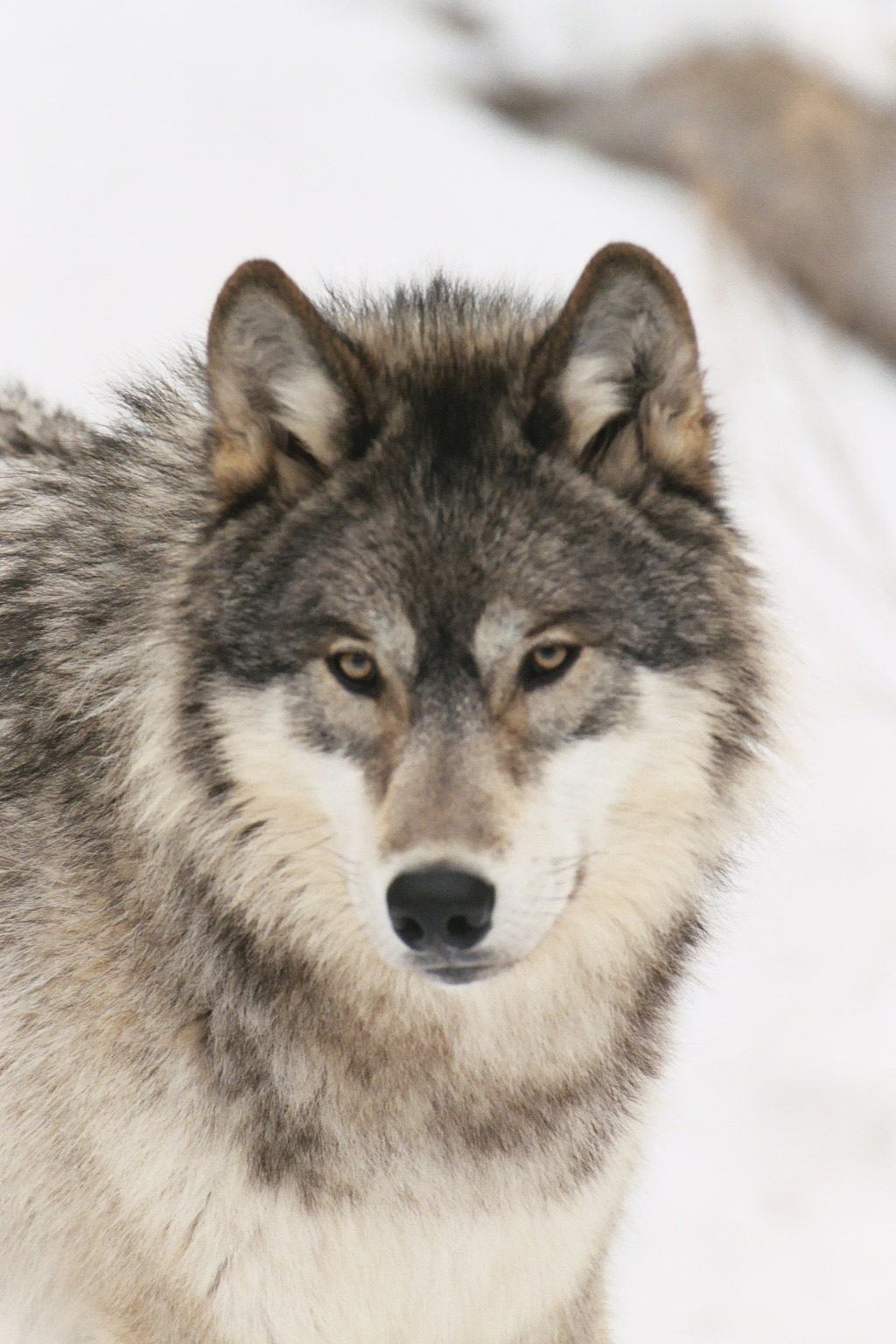
Based on the book "The last wolf", by Jim Crumley, I'd like to write some paragraphs in defense of my favourite creature on Earth: the wolf. In fact, this animal has been pursued and brutally killed in numerous places in the planet due to a feeling of hatred widely spread among the humankind.

Source: http://howlingforjustice.files.wordpress.com/2011/06/winter-wolf-all-about-wolves.jpg


However, this feeling has not always been shared by humans.

A) LGM - Prehistory.

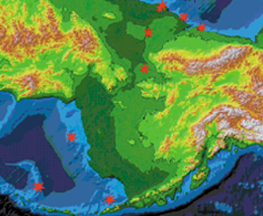
If we go back in time to the Pleistocene, wolves were the most widespread mammals, and the first to be domesticated. During the Last Glacial Maximum (Some 20,000 years ago), the sea level was lower, which created a land bridge between Asia and North America in the current Bering Strait (see picture 1). Big American herbivores took advantage of this connection and crossed it, finding really rich grassland areas on the other side. Wolves pursued these herbivores and gradually pushed them towards the west and that's the reason why horses reached the westernmost parts of Europe.

Picture 1: Bering Strait during the LGM. Green areas represent land over sea level.
Source: http://www.geotimes.org/jan03/feature2_topLGM.jpg

After the glaciation, Canis lupus (wolves) and Homo sapiens could adapt to the environment relatively easily. Despite both being hunters, wolves were better, so humans learn from wolves to hunt more effectively, thus treating the wolf as a teacher. Evidence of this remains in paintings, carving, writings and word-of-mouth.


B) Beginning of human civilizations.

Humans fell out with wolves when they started to be sedentary. Along with the invention of fire, the mankind could create meadows when there were forest (therefore destroying wolves' habitat) so their domestic animals could graze on them. Yet, needs to protect the cattle from wolves arose, which would oppose the human race and wolves.

However, the myth of Romulus and Remus, founders of Rome that were fed by a she-wolf and brought peace with the Sabines (whose worship animal was the wolf) restored wolf's previous high status.


C) Christianity and the Middle Age.

When Christianity came, as it considered God a good shepherd, wolves eating livestock were the personification of Devil. As a result, hundreds of myths of ferocious big black wolves attacking normal people were formulated, which led to hatred towards this species that is still deeply rooted in the human population. In this book, the author tries to dispel some of these myths:

- First of all, we should take into account that myths change greatly and very rapidly over time, and tend to progressively exaggerate reality. For example, wolves are described bigger than they actually are (see Picture 2) and most people that have never seen a wolf think this way. Moreover, no black wolves have been found in Europe, whereas lots of stories told in Scotland describe fierce black wolves.

Picture 2: European wolves hunting deer. Notice the height difference.
Source: http://www-tc.pbs.org/wnet/nature/files/2008/08/610_ag_graywolf1.jpg

- Secondly, deer, reindeer, moose, goat and wild boar are wolves' favourite prey, which means that only if they disappear wolves will start preying cattle. Therefore, if wolves started hunting cattle was because humans also were chasing the other animals mentioned before.

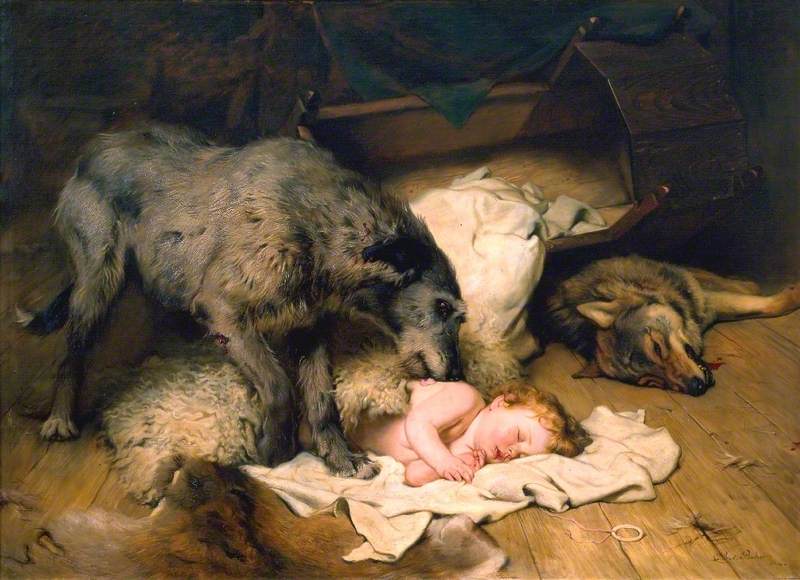
- Furthermore, such stories told in Scotland contained incredible and magnificent aspects (cf Picture 3): there was a strong and tall hero, quite similar to William Wallace, by the way; this could be explained because the Victorians heard these stories when they were building the monument in honour of William Wallace in Stirling. This character struggled with a really big a fierce wolf that put his life in risk, but something heroic eventually occurred leading to a highly astonishing death of the creature.

Picture 3: Welsh tale of Gelert. Llywelyn the Great, killed his faithful dog Gelert after finding him covered in blood which he presumed belonged to his baby son. Only later does he discover that his son is still alive, as his dog had been fighting with a wolf killed by Gelert to defend the young prince.

Source: http://upload.wikimedia.org/wikipedia/commons/e/e0/Gelert.jpg

- These characteristics are far more common in which is known as the last-wolf syndrome tales. This concept explains how thrilled humans were to be the one that executed the last wolf of the country (an example is shown in picture 4). Therefore, numerous tales narrated how many last wolves were killed in different parts of the country and besides, all of them contained the same features: there was a big she-wolf protecting her litter, which was even more fierce and terrigying than ever, and the hero had a very dangerous battle with the wolf until the hero showed his abilities and superiority in a last movement that put the big creature to death. The similarities between all these stories make us question about their degree of reliability. Most likely, they're not true and the last wolf may have died from a simple death; in fact, in one place it's claimed that a housewife with a frying pan hit the last wolf, thereby killing it.

Picture 4: Memorial to the last wolf in Sutherland, Scotland. 
Source: http://www.landsendjohnogroats.info/images/northern_scotland/570/67_helmsdale6.jpg

- Finally, surnames of important warriors and kings containing the word wolf evidence the high status conceded by this species. Such surnames are Ethelwulf (the Noble Wolf), Berthwulf (the Illustrious Wolf), Eadwulf (the Prosperous Wolf) and Ealdwolf (the Old Wolf).


D) Current times.

Still during the 20th and 21st century, we can observe lots of prejudices towards the wolf. As an example, I'm leaving an extract of an English children textbook from the 19th century:


"A savage aspect, a frightful howl, an insupportable odour, fierce habits, and a malignant disposition are the leading qualities in its nature, which render it dangerous and detested when living and useless when dead. For this reason, hunting the wolf is a favourite diversion among the great in some countries; and it is a species of the chase at which reason need not blush, nor humanity drop a tear." 

Nevertheless, the wolf plays an essential role in the ecosystems where it dwells. Indeed, the extermination of them in Scotland lead to landscape degradation, as the lack of this predator made herbivores reproduce uncontrollably, which prevented forests from developing and eventually drived forest degradation.


Luckily, some places have already realised how necessary wolves are in the ecosystems and have made big efforts to reintroduce them to their habitats. This is the case of Yellowstone (cf Picture 5), where the coming of wolves was carried out thanks to the Nez Perce tribe. Their arrival brought about the recovery of willow, which in turn attracted beavers that created aquatic ecosystems where reptiles, amphibians, moose and other animals could flourish. This phenomenon is known in ecology as a trophic cascade, brought about by a single animal.


Picture 5: Wolf Pack living in Yellowstone, reintroduced thanks to the Nez Perce tribe.
Source: http://www.wolftracker.com/TheWildSide/nez%20perce%20april%2012%20a.jpg

E) CONCLUSION

I would like to summarise some points commented above to finish this text:

- Firstly, as we behaved as animals, we considered all creatures our peers (we even prayed before hunting to invoke forgiveness for the following acts), except the wolf which, being better at hunting, obtained a higher status and was considered a teacher.

- It was only when the human became sedentary, and later on got worse with Christianity, that the wolf started being despised and pursued, as it became a threaten to cattle. Yet we said that before cattle, wolves prefer to prey other animals (deer, moose...) and go for cattle when the former disappear.

- Myths about wolves trying to kill people were very numerous in the Middle Age and all exaggerated the wolf's features to make it more aggresive and fierce against humans. Consequently, humans were frightened when hearing wolves howling, because they thought the hunting wolf was close, even though it could be up to 5 miles away; in addition, howling is a communication symptom, since wolves hunt in silence. Wolves were thought to howl at the Moon, but that's not true; the only piece of truth within this is that wolves use to hunt when there's Full Moon, as there's more light during this time.

- These medieval beliefs are still part of most of the population's opinion about this animal. People fear them, even if wolves seldom kill humans (as we said, they prefer some wild animals, then cattle); actually, more people die from attacks from domestic dogs than from wolves.

- Reintroduction of wolves, to their habitats although slowly, is taking place, especially thanks to tribes such as Nez Perce (cf Picture 6). It's funny to check that the closer a tribe lived to wolves, the more they liked them, as they were away from all these fake myths so rooted in urban cultures. Moreover, the restoration of wolves has been proved to bring benefits to the ecosystem because they hunt herbivores that otherwise, wouldn't let a forest freely develop.

 Picture 6: Nez Perce woman drawn with a wolf.
Source: http://photos.igougo.com/photos/journal/pref/Nez_Perce_woman_and_pet_wolf_prefRes.jpg

In conclusion, although I think the author describes wolves as if they were harmless little cats, I mostly agree with him and share his opinions about the strong need to bring them back to the habitats they once occupied. Of course, this could be a problem for farmers or shepherds, but we should also think about the ecologic benefits their introduction would bring to our more and more degraded landscapes.


BIBLIOGRAPHY

CRUMLEY, J. (2010). The last wolf.
Author: Xabi Otero
•3:14 PM
She was known as number 14 and her mate was Old Blue. Even if it does sound like the first line of a bad country and western song, it was a match made in heaven, or at least in Yellowstone, which in wolf terms is much the same thing. Biologists like Douglas Smith who are deeply embedded in the project to restore wolves to Yellostone National Park in the nothern United States give wolves numbers or, very occasionally, names, to help keep track of them. Number 14 and Old Blue were two remarkable animals, even by the rarefied standards of the tribe of wild wolves. The average lifespan of a Yellowstone wolf is three to four years. Old Blue was almost 12 when he died, at which point Number 14 had to be at least eight years younger. She learned prodigiously from such a seen-it-all-before wolf as Old Blue, so that when he died, she was equipped for anything that the North American wilderness could throw at her. But first she did something astonishing.

In the last few months of his life, Old Blue and number 14 mated one last time. But when he died, number 14 took off, leaving behind her pups and yearling wolves, leaving the territory of the pack. Alpha female wolves don't take off when they have pups, don't abandon their families. It doesn't happen. But 14 took off alone into deep snow, indo a landscape that, according to Smith, was 'so inhospitable it contained not a single track of another animal'.

She was eventually found by a spotting plane, gave it a single cold stare, then simply continued travelling until all efforts at tracking her failed. She vanished.

She was gone for a week. Then quite suddenly she turned up again, rejoined her family and the rest of the track. Smith wrote: 'Though no-one wanted to say 14 travelled alone so far because she was mourning the loss of her mate, some of us privately wondered.'


p.d. Picture randomly chosen.

Source: 

 CRUMLEY, J (2010). The last wolf.
Author: Xabi Otero
•11:54 PM
This famous saying was coined in Pembrokeshire (Wales) in the mid 19th century, with other similar phrases such as "Eat an apple on going to bed, And you'll keep the doctor from earning his bread" or "Ait a happle avore gwain to bed, An' you'll make the doctor beg his bread".

I've read a post about the benefits of eating apples and I'm going to sum up the 8 good points mentionned in such text:

1- Apples contain Vitamin C, which helps greatly our immune system.
2- They contain flavonoids which, as well as having antioxidant effects, prevent both coronary heart disease and cardiovascular disease.
3- They're low in calories compared with any other sweet product (only 70-100 calories), but they contain sugar alike, so the desire to eat sweets disappear when taking an apple.
4- They help prevent cancers (colon, prostate and breast).
5- As this fruit contains phenols, it reduces bad cholesterol and increases good cholesterol.
6- They prevent tooth decay, produced by a bacteria that dissappears in a very high proportion (80 %) thanks to the liquid apples had inside them.
7- In addition, due to the phytonutrients they contain, apples prevents neurodegenerative disorders (say Alzheimer's and Parkinsonism).
8- Eating 5 apples a week reduces breathing problems such as asthma.

So, we can understand why it's claimed that eating apples is so healthy.


Author: Xabi Otero
•12:55 PM
A menudo ocurre que en días de tormenta estival, la leche puede llegar a cortarse incluso a los 5 minutos de haberse servido. Aparentemente, existe una relación entre este tipo de tormentas y la leche, la cual voy a tratar de aclarar.

En primer lugar, es necesario aclarar el motivo por el que la leche se corta, sin relacionarlo a priori con aspectos meteorológicos. La leche contiene una serie de nutrientes, que en el caso de la vaca son los siguientes: 87 % agua, 3'6 % de lípidos, 3'3 % de caseína (proteína que contiene la leche), 4'7 % de glúcidos (la famosa lactosa), y el resto lo componen las vitaminas (A y B), pus y sales minerales tales como calcio y fósforo. Sin embargo, no contiene ningún ácido.

El ácido aparece cuando algunas bacterias que existen en el ambiente, como el Estreptococo (imagen inferior izquierda) y algunos Lactobacilos (imagen inferior derecha), se posan sobre la leche y se alimentan de la lactosa de la misma para conseguir la energía que les permite desarrollarse; como producto de desecho de su metabolismo generan ácido láctico. Estos microorganismos sobreviven incluso al proceso de pasteurización al que someten a la leche que nos venden.

Las susodichas bacterias, además, proliferan a medida que la temperatura aumenta, por lo que el proceso se acelerará a medida que el calor se incremente. De aquí podemos extraer la primera conclusión sobre la relación entre tormentas estivales y el fenómeno de la leche que se corta: todas estas tormentas están precedidas por un bochorno acusado (de hecho, estas tormentas aparecen en días de calor excesivo que generan el ascenso de una masa de aire, la cual con la altura se enfría rápidamente y termina por condensarse en forma de lluvia). Este bochorno, pues, acelerará el proceso.

Además del calor húmedo, la bajada de presión y la ionización del aire aceleran el proceso de fermentación de la leche. La electricidad es clave en el proceso de descomposición, ya que cuando la ionización del aire es grande, la fermentación láctea se ve favorecida. La leche cortada no es sino fruto de la acidificación de la misma, formándose como resultado unos grumos característicos que forman el cuajo.

Igual que se corta la leche al echarle unas gotas de vinagre (debido a su contenido de ácido acético), la presencia de iones también convierte a la leche en un medio ácido, al alterar químicamente las proteínas lácteas. La caseína se coagula con rapidez y empieza a cuajarse la leche.

Por último y ya como curiosidad, en el pueblo asturiano de Porrúa, en el concejo de Llanes, elaboran los llamados quesos de trueno. Esta variedad de quesos debe su nombre a que se elaboran sólo cuando hay tormenta en la zona, con fuerte aparato eléctrico. La leche se cuaja con rapidez y el queso resultante tiene un sabor amargo muy característico.

[Recomendación: leer el primer comentario publicado en este post, en relación con el deporte y las agujetas.]

FUENTES:

http://www.ciencias.ies-bezmiliana.org/revista/index.php?option=com_content&task=view&id=43&Itemid=26
VIÑAS, J.M. 2010. Introducción a la meteorología.

p.d. Me falta conocer la relación entre una baja presión atmosférica y la aceleración de este proceso. Si alguien tiene alguna idea, por favor que la comente.
Author: Xabi Otero
•4:17 PM
Se dice muy a menudo que el tamarindo es un árbol muy característico del paseo de la Concha de Donostia, pero hay una pequeña confusión. En realidad, se trata de tamarices, que a pesar de su similaridad fonética, no tienen mucho que ver.

Paseo de la Concha, Donostia.

Los tamarices llegaron a Donosti ya que a finales del siglo XIX las ideas urbanistas de París (relacionadas con convertir las ciudades en sitios más "chic") calaron hondo en Donosti. Fue el hijo de Bernardo Ponsol (éste propietario de una tienda de sombreros que aún permanece en la calle Narrika) quien viajó a París y compró varias semillas de los tamarices, habiéndose quedado impresionado con ellos. Por si esto fuera poco, se adaptaban perfectamente a la salinidad y los fuertes vientos que azotaban (y azotan) la Concha.

Hay que señalar que no fueron muy bien acogidos en un primer momento, ya que eran unos árboles enanos y extraños que, por encima de todo, estaban encerrados en jaulas para que pudieran crecer debidamente.

Sin embargo, volvamos al tema de la confusión entre tamarindo y tamariz. Para saber en qué se diferencian uno de otro, voy a proceder a dar una breve explicación sobre cada uno de ellos.

El tamarindo corresponde al inmenso grupo de las leguminosas, esparcidas por las zonas templadas y tropicales de todo el mundo. El tamarindo posee un porte corpulento con hojas dispuestas a modo de la acacia. Sus frutos poseen una pulpa de sabor dulce, usada desde hace años como laxante. Este árbol es oriundo de África, pero parece ser que los médicos árabes lo introdujeron en Europa hacia el siglo XV.

Tamarindus indica (Tamarindo)

Por el contrario, el tamariz pertenece a una familia bien modesta, donde se cuentan unos pocos géneros. Posee hojas menudas, empizarradas, que forman escamitas abrazadoras alrededor de las delgadas ramitas en donde se insertan. Sus flores son pequeñas y su fruto es una diminuta cápsula dentro de la cual se hallan las semillas, cada una de ellas provista de un vilano mediante el cual se dejan llevar por el viento a puntos distantes para allí germinar si se dan las condiciones óptimas. Prefiere las orillas de los ríos y lugares arenosos.

Tamarix sp (Tamariz)
Author: Xabi Otero
•10:45 AM

This lyrebird, whose scientific name is Menura novaehollandiae, lives in the forests of southeastern Australia (from southeastern Victoria to southeastern Queensland). Physically, the two feathers that has in both sides of the tail are amazing (forming the shape of a lyre, which gives the name to the bird). During courtships displays, the male inverts his tail over his head, fanning his feathers to form a silvery white canopy.


But the most special feature of this bird, is its ability to reproduce a huge variety of sounds. Both male and the female can do this, but males sing more often and louder.

Related to their breeding system, they use to do it in winter. Then, females and males defend separated territories (females keeping the youngs). A female may visit several mates before she mates, but it's not known if she's done it more than once. The female lays a single egg and builds a domed nest, often camouflaging it with ferns or moss. The chick spends nine months with its mother before becoming independient.


And finaly, so that you can appreciate the wide variety of sounds it can imitate, I'll put here a video in which it shows all its skill in terms of reproducing so different kinds of sounds (from another bird's one to a photo-camera, as well as an ambulance).


Author: Xabi Otero
•1:51 PM
These two are different species of ants, aka as weaver ants.

Here is how a weaver ant nest-construction project gets under way.

A single worker stands on a leaf and reaches to grasp the edge of another leaf nearby. If the span is too great, a second worker climbs over the first, and the bottom ant grasps the newcomer by its wire-thin waist and holds it out closer to the goal. Still not enough? A third ant clambers over the first two and is lifted out farther yet. Ant by ant, a living chain grows into thin air like the arm of a construction crane. Once the distant leaf is grabbed, the squad pulls in unison, often with nest mates that have formed parallel chains and reinforcing cross-links, to draw the leave's edges together. Workers begin to array themselves like live staples along the seam between the leaves, legs holding on to one edge, jaws gripping the other. And then? They wait.

As evening comes on and the humidity rises, more workers arrive from nearby nests. They've carrying larvae that are about to enter the pupal stage and metamorphose into adults.

Larvae of other ant species spin individual protective cocoons of silk. Oceophylla larvae donate their silk to the colony. Straddling the leaf seam, an adult uses its antennae to tap the head of the larva held in its jaws, telling it to extrude silk from its salivary glands. A worker's operating manual would read: swing head to one side. Tappity-tap larva. Dab glob of its silk onto leaf. Swing head opposite way, drawing thread across to other leaf. Keep tappity-tapping larva. Dab next glob there. Step forward. Repeat procedure. When finished, move on to other tasks.

If you're close enough to witness this use of juveniles as sewing tools, some workers are probably goingo to be biting you, having caught your motion with their keen eyes, sensed the odors in your breath, or felt movement when you brushed a branch. When you're really close, an agitated throng coats the nearest plant parts like bristling fur, each ant lifting its body high on four legs, raising its gaster -the largest and hindmost segment of its body- up (sometimes vibrating it), a posture that signals excitement. The two front legs flail forward; they can hardly wait to grab you. The sharp-tipped , curving jaws are cocked open, poisen to pincer, puncture and inject some glandular conoction that adds extra hurt; it may make you woozy as the number of bites adds up.

Meanwhile the troops are spraying formic acid, which burns the nostrils like a whiff of ammonia. They're also releasing alarm pheromones, from that upraised rear end as well as those formidable jaws, while other workers race off to contact nest mates directly, establishing scent trails along the way to guide them toward the threat. Give the recruiters a few minutes and thousands may be streaming in your direction. Don't linger. The population of some colonies exceeds half a million.


So, we can see how successful the colaboration between the populations is. If humans were more cooperative, how long would we have arrived?
Author: Xabi Otero
•11:50 PM
How far would you go to feed your kids? Mothers of some worm-like amphibians called caecilians literally give a piece of themselves, by allowing their young to eat their flesh.

The mothers of Boulengerula taitanus create a nutrient-rich fatty outer layer of skin after laying their eggs. When their offspring hatch, the babies scrape this layer off with specialized teeth.

"It's quite an amazing thing to observe," says biologist Mark Wilkinson of the Natural History Museum in London, lead author of an article describing the phenomenon in Nature this week.

Wilkinson's group noticed the skin-eating behaviour in Kenya, after seeing that amphibian mothers are often a paler and milkier shade of blue than other females. They had also noticed that young amphibians are born with their own set of teeth.

The researchers brought the burrowing animal into the lab to investigate, videoing 21 mothers with broods of between two and nine young. In the week after their babies hatched, mothers lost about one-seventh of their bodyweight - which showed up as skin cells in the stomachs of young.

Other amphibians, such as frogs and salamanders sometimes eat their own skin after it has shed, to recycle nutrients. This newly observed behaviour is similar to that, says Wilkinson, except the babies join in the shedding process.

As to why the mothers let themselves be flayed, Wilkinson suggests that making a fatty layer of skin may be cheaper for the mother than giving her eggs a large yolk. And if a baby dies, he notes, the mother's investment in the egg is wasted - but she might be able to save her skin and use it again.

No one yet knows what is in this fatty layer, or how the young know when to stop eating their mothers' skin to avoid killing her. Wilkinson will leave these questions to others; he plans to look for more amphibians that show the same behaviour.

"It's a weird and wonderful thing," says Wilkinson, "It raises more questions than it answers."

Author: Xabi Otero
•9:51 PM

For centuries they roamed Europe's forests -massive bovines calles aurochs that they were depicted on cave walls by Paleolithic artists and prized as hunting trophies. They died out nearly 400 years ago. Now genetics may bring them back to life.

Sound like a Jurassic Park sequel? It's actually the real-life plan of Project Tauros, a consortium of European scientists using DNA sequenced from aurochs teeth to steer a novel breeding program. Project researchers are currently identifying living cattle -including Spanish Limiana and Italian Maremmana- that still carry aurochs genes. Then breeders will cross those cattle to retain the pertinent DNA, jettison the rest, and make bovines that, in about a decade, are expected to look and act just like their extinct ancestors.

Aurochs were herbivorous behemoths, and in the past they browsed on beech, a type of tree now choking Europe's woods. Today such housecleaning would help regrow native flora -as one resurrected species gives other, threatened ones a shot at survival.
Author: Xabi Otero
•12:20 PM
Hace 220 millones de años, al mismo tiempo que los dinosaurios, apareció en Asia meridional un reptil que tenía la característica de estar protegido por un caparazón: la tortuga.

De las primeras tortugas salieron todas las especies actuales, que han evolucionado para adaptarse a buena parte de los climas y ecosistemas del planeta e incluso, desde hace unos 80 millones de años, al mar. Desde entonces, cuando una hembra de tortuga marina ha sido fecundada busca una playa tranquila, se adentra en ella hasta llegar más allá de la marea, hace un agujero y entierra en él entre 50 y 100 huevos. Al cabo de un par de meses, cuando todas las tortugas están bien formadas -se esperan unas a otras para salir todas de golpe-, una noche rompen el cascarón del huevo al mismo tiempo y empiezan a correr hacia el mar. Nadie les ha enseñado cómo deben hacerlo, pero saben perfectamente que la playa está llena de peligros y que hasta que no lleguen al agua estarán a salvo. Las que lleguen allí tendrán que empezar a comer frenéticamente y crecer todo lo que puedan para no ser presa fácil de un depredador. La madre las ha abandonado cuando ha puesto los huevos y no la verán nunca más. Nacen, pues, sabiendo todo lo que deben saber: la única diferencia con una tortuga adulta es el tamaño y la experiencia.

Mucho más tarde, hace poco más de 100.000 años, apareció en África la única especie del género Homo que ha sobrevivido hasta hoy: nosotros, el Homo sapiens. A diferencia de las tortugas marinas, nuestras crías necesitan años para ser autosuficientes y, si las dejáramos un solo día sin protección y alimento, probablemente morirían. Esta indefensión, no obstante, es necesaria para la formación de nuestro cerebro. Nacemos sin saber casi nada y tenemos que aprenderlo todo, absolutamente todo. No sabemos andar, ni buscar alimento, ni defendernos. Pero poseemos un cerebro muy plástico capaz de adquirir conocimientos y de hacer nuevas conexiones de neuronas cada día. Muchos otros seres vivos tienen la capacidad de aprender lo que nos rodea, de hacer asociaciones entre estímulos y respuestas y de usar su experiencia para no cometer los mismos errores y repetir las cosas buenas que aprenden, pero el cerebro humano es, de lejos, el que cuenta con más capacidad cognitiva. El precio que debemos pagar por tener este cerebro es que durante los primeros años de nuestra vida no nos valemos demasiado por nosotros mismos, necesitamos de los adultos para conseguir alimento, vivienda o protección y dedicamos buena parte del tiempo a aprender a vivir y a relacionarnos. A esta época la llamamos infancia.
Author: Xabi Otero
•11:43 PM
Because in the deepest ocean, where it was not expected to find life, eventually many amazing fishes were discovered, which they are called "Abyssal fishes". A reason for this name could be that they live below about 2000 m depth, where humans thought there was the abyss. As there is no light, those fishes have own light (produced by a bacterium which reacts with the animal). Strange shapes, curious sizes, colourful displays... Here you are a couple of videos about them, enjoy them!