Author: Xabi Otero
•12:15 AM
Voici ce que je décide, répliqua le professeur Lidenbrock en prenant ses grands airs : c'est que ni toi ni personne ne sait d'une façon certaine ce qui se passe a l'intérieur du globe, attendu qu'on connaît à peine la douze-millième partie de son rayon ; c'est que la science est éminemment perfectible, et que chaque théorie est incessamment détruite par une théorie nouvelle. N'a-t-on pas cru jusqu'à Fourier que la température des espaces planétaires allait toujours diminuant, et ne sait-on pas aurjoud'hui que les plus grands froids des régions éthérées ne dépassent pas quarante ou cinquante degrés au-dessous de zéro ? Pourquoi n'en serait-il pas ainsi de la chaleur interne ? Pourquoi, à une certaine profondeur, n'atteindrait-elle pas une limite infranchissable, au lieu de s'élever jusqu'au degré de fusion des minéraux les plus réfractaires ?
Author: Xabi Otero
•11:55 PM
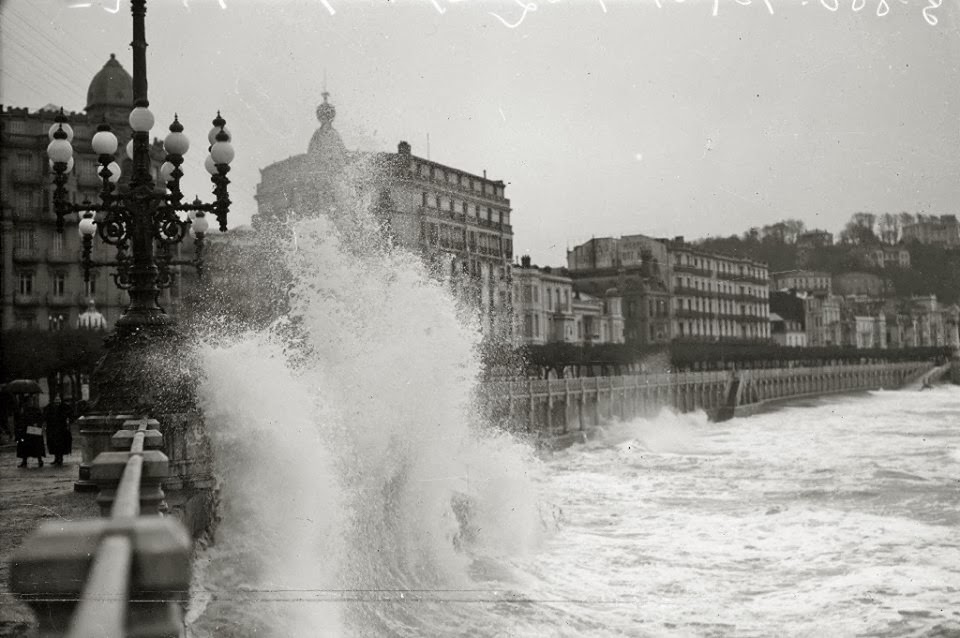
Azken egunotan, Donostian erregistratu diren olatu erraldoien berri izan dugu Euskal Herrian. Tenporala izenarekin ezagututa, berriz ere itsasoak bere boterea erakutsi digu gizakioi. Euskaldun gehienak oso harrituta daude, baina hau al da harritzeko modukoa? Aldaketa klimatikoaren ondorioa apika?

Egia esan, Donostian oso ugariak izan dira tenporal hauek historian zehar eta zorionez, dokumentu grafikoak baditugu. Segidan aurkeztuko diren argazkiek Gipuzkoako hiriburuan urte ezberdinetan jazotako itsas-ekaitzak islatzen dituzte (ezkerretatik eskubitara eta goitik behera: 1923, 1927, 1933, 1935 eta 1944). Eta argi ikusten da azken argazkian olatu handiek eragindako suntsipena Paseo Berrian, egun gertatzen den antzera. Halaber, nire amonak kontatu zidan bere gaztaroan horrelako olatuak gertatzen zirela behin baino gehiagotan, eta halako batean, Donostiako espigoia eraiki zuten baino lehen, olatuak Mirakruz Kalera heldu zirela. Beraz, fenomeno berria ez da, inolaz ere, eta badirudi ez dela areagotu denboraren poderioz.


Iturria: San Sebastián Desaparecida Facebook-eko taldetik ateratakoak. Honek, aldi berean, Kutxatekatik atera ditu.

Hala izanik, esan dezakegu marea bortitz hauek naturalak direla. Eta hona iritsita, mareak sortzearen arrazoiak esplikatzea komenigarria da. Horretarako, Eguzki-Lur-Ilargi sistemara joko dugu. Sistema honetan, gorputz bakoitzak besteak erakartzen ditu grabitatearen bitartez. Baina indar hau distantziaren menpe dago; zenbat eta gertuago, orduan eta indar handiagoa egongo da.


Iturria: Introduction to astronomy deituriko irakasgaiaren apunteak, nik aldatuta.

Eguzkia eta Lurra soilik aintzakotzat hartuz gero, goian agertzen den irudi bat edukiko genuke. Goiko marrazkiak Lurra irudikatzen du (zirkulu beltzaren bidez) eta ezkerretara eguzkia kokatu behar genuke. Esan dugun gisan, Eguzkiak Lurrarengan erakartze-indarra aplikatzen du Lurraren zentrutik R distantzia batera; era berean, kontrako norabideko magnitude bereko indar bat sortzen da Lurrean, indar zentrifugoaren izenarekin ezagutzen dena eta Eguzkiaren grabitate-indarra konpentsatzen duena. Indar zentrifugoak intentsitate-balio berak izango ditu Lurraren edozein punturako, grabitatea puntuaren arabera ezberdina den bitartean, Eguzkiarekiko distantzia (R) aldatzen delarik. Adibidez, A punturako, Eguzkiarekiko distantzia jaitsi da R(A) puntura zeinen balioa R(A) = R - Lurraren Erradioa baita; arestian aipatu izan den lez, indarra igotzen da distantzia murrizten den heinean, beraz A puntuan, eguzkiak ezartzen duen indarra handiagoa da Lurraren zentruarekin alderatuz eta honek esan nahi du indar zentrifugaren magnitudea gainditzen duela. C puntuan, aldiz, distantzia R(C) handiagoa da (R(C) = R + Lurraren Erradioa), beraz indarra txikiagoa izango da, berriz indar zentrifugoarekiko desoreka bat sortuz. Amaitzeko, B eta D puntuek zentruaren indar-intentsitate berbera izango dute (R(B) = R(D) = R), baina norabidea zertxobait okertuko da Eguzkiaren zentruaren kokapena dela eta. Honen guztiaren ondorioz, goiko irudiko gezi horiek indikatzen digute zeintzuk diren Lurraren zentruan ezartzen den indarraren eta puntu horien indarren arteko diferentzia. Honek esan nahi du eguzkia nolabait saiatzen dela Lurraz tiratzen marrazkian grisez agertzen den (exageratutako) irudi bat emanez.

Alabaina, Lurra zurruna da eta ezin da modu horretan deformatu; itsasoa, ordea, fluidoa da eta deformatu ohi da hain ezagunak diren mareen bidez. Itsasgora A eta C bezalako puntuetan gertatuko da eta itsasbehera, B eta D puntuen longitude bera duten edozein tokitan.

Hala ere, Eguzkia ez da mareak sortzen dituen eragile bakarra, ezta garrantzitsuena ere. Hori Ilargiaren esku gelditzen da, zeinek, masa askoz ere txikiagoa daukan arren (indarra masa handiagoekin ere areagotzen da), Lurretik oso hurbil kokatzen denez gero, marea handiagoak sortzeko gai baita. Ideia bat izan dezazuen, eguzkiaren ondorioz sortutako mareak ilargiaren ondorioz sortutakoak baino % 46 txikiagoak dira, gutxi gora-behera.


Iturria: http://wc1.smartdraw.com/examples/content/examples/10_education/1_astronomy/phases_of_the_moon_l.jpg

Orduan, Ilargia mareen eragile nagusia dugu eta dakigun bezala, gorputz honek fase berezi batzuk aurkezten ditu hilabetero. Fase hauen existentzia Eguzki-Lur-Ilargi sistemaren kokapenari hertsiki lotuta daude. Hala, ilberria dagoenean, Ilargia Lurra eta Eguzkiaren artean kokatzen da; era honetan, Eguzkiak argitzen du Lurretik ikusten ez dugun Ilargiaren partea (hau da, Ilargiaren aurpegi urruna). Guretzat, Ilargia ilun agertzen da. Ilbetea dagoela esaten dugunean, berriz, Lurra kokatzen da sistemaren erdian, beraz Eguzkiak guretzat ikusgarria den Ilargiaren partea argitzen du (Ilargiaren aurpegi hurbila). Tarteko faseetan, Ilargia ez dago ez Lurraren aurrean, ez Lurraren atzean, irudiak erakusten duen gisan.

Hau esanda, zein fasetan espero zenukete marea handienak kokatzea?


Iturria: Waves, tides and shallow water processes. The Open University.

- Ilberria (goiko irudia) eta Ilbetea (beheko irudia): hauek ematen direnean, esan den legez, Eguzkia eta Ilargia norabide berean daude (syzygy-n), Ilargia Lurraren aurrean edo atzean egonda ere. Honek suposatzen du Ilargi zein Eguzkiaren erakartze-efektua areagotu egingo dela Lurrean eta deituriko udaberri-marea edo ingelesez spring-tide izugarriak eratuko dira.


Iturria: Waves, tides and shallow water processes. The Open University.


- Ilgora eta Ilbera: Ilargia eta Eguzkia ez daude syzygy-n edo norabide berean; beraz, Ilargiak ezartzen duen erakartze-indarra perpendikularra da eguzkiak ezartzen duenarekiko. Hau dela medio, nolabait bi indar horiek gehiago orekatzen dira eta marea baxuagoak sortzen dira, marea hilak edo ingelesez neap tide kontzeptuarekin ezaguturikoak.


Iturria: http://thewatchers.adorraeli.com/uploads/perigee.png

Kasualitatez, egun hauetan (baita urtarrilaren hasieran ere) ilberriaren fasetik gertu egon gara, gaur bertan (urtarrilak 30a) ilberria egonda. Eta ilberria egoteaz gain, aintzat hartu behar dugu Ilargiaren orbita pixka bat eliptikoa dela, zeinek inplikatzen duen momentu batzuetan, Ilargia Lurretik gertuago egongo dela (perigeo) eta beste batzuetan, aldiz, urrunago (apogeo). Gertutasun edo urruntasun horrek distantzietan % 13ko aldaketak eragingo ditu, mareak % 20an aeragotuz edo murriztuz.

Laburbilduz, egun hauetan koinziditu du, alde batetik, ilberria eta bestetik, Ilargia perigeotik gertuko kokapena. Hau gutxi balitz, borrasken ondorioz finkatu den eguraldi desegonkorrak mareen egoera areago okertu du. Beraz, badugu suntsipenak sortzeko gaitasun izugarri altua duen elementu ezberdinen konbinaketa bat. Zer falta zaigu gure nahasketa leherkorrean are suntsitzaileagoa izan dadin?

Itsasotik gertu ezarri den hiri bat, hain zuzen, aldaketa hauekiko oso sentikorra dena. Horixe da Donostiak jokatuko duen papera, beraz. Arrisku naturalen ikuspuntutik, arrisku bat agertzen da bakarrik gizakiak balizko mehatxu natural baten ondoan bere bizilekua eraikitzen duenean. Donostia itsasoari irabazitako lurretan hazi da eta bere paisaia esanguratsuenen artean, Kontxa, Haizearen Orrazia, Paseo Berria edo Kursaala egongo lirateke, eta guztiak itsasotik oso hurbil kokatzen dira. Horregatik, halako fenomenoak gertatzen direnean, itsasoak nolabait bere eremua eskatzen du bueltan, bidean aurkitzen dituen edozein azpiegitura deuseztatuz. Beste hitzetan esanda, Donostiaren kokapen ederrak koste bat dakar.

Orduan, zein da irakaspena? Muturreko gertakariak dira ala aldiz, nahiko ugariak diren eta baldintza naturalen menpe mugitzen diren fenomenoak? Aldaketa klimatikoak eraginik al du kasu honetan ala ekonomiak kontrolatutako hiritartze-prozesuei bota behar genieke errua? Noiz arte pairatu behar ditugu euren burua elite izendatzen dutenek gauzatutako akatsak, etekinak ateratzea helburu bakar dutenak?

Esaldi batek dioena apur bat aldatuz, "Gertakari baten interpretazioa aldatzen da segun eta ze kristaletik begiratzen duzun". Ba agian bada kristala aldatzeko garaia.

BIBLIOGRAFIA:

- COURSERA, 2013-2014. "Introduction to astronomy" izeneko irakasgaiaren apunteak.
- THE OPEN UNIVERSITY. 1999. Waves, tides and shallow-water processes, second edition, pp 50-88.
Author: Xabi Otero
•5:20 PM
La energía liberada por una bomba atómica proviene de la conversión de masa en energía (E = mc^2; c = velocidad de la luz). Pero si quieres calcular la energía de un camión que choca o de un meteorito que frena, una relación similar interviene, si bien ahora la energía provendría de la masa que está frenando. La energía que se pierde en el frenado equivale a m/2 (masa del meteorito) * v^2 (velocidad del meteorito).
Por lo tanto, en Hiroshima la cantidad de masa convertida en energía es de 0.7 gramos * velocidad de la luz, lo cual suma un total de alrededor de 16.000 toneladas de TNT. El meteorito entró a la atmósfera con una velocidad asombrosa de 18 km/s. Enorme, pero alrededor de 15.000 veces más pequeña que la velocidad de la luz. Sin embargo, era mucho más pesado, alrededor de 7.000 toneladas. Si divides ambos números, el resultado mostrará que la energía liberada por el meteorito es alrededor de 20 veces mayor que la de la bomba de Hiroshima.

FUENTE: http://blogs.tn.com.ar/desmitificador/2013/02/18/el_meteorito_de_rusia_equivale_20_bombas_de_hiroshima_como_es_eso/
Author: Xabi Otero
•5:12 PM
The energy released by an atomic bomb comes from the transformation of mass into energy (E = mc^2; c = speed of light). But if you want to calculate the energy of a lorry crashing or a meteorite that brakes, a similar relationship takes part, but the energy now comes from the mass that is braking. The energy lost by braking is equal to m/2 (meteorite's mass) * v^2 (meteorite's velocity).

Therefore, in Hiroshima the amount of mass converted into energy is 0.7 gr. * speed of light, equal to around 16,000 tons of TNT. The meteorite entered the atmosphere at such high speed as 18 km/s. Enormous, but about 15,000 times smaller than the speed of light. Yet it was much heavier, around 7,000 tons. If we divide both numbers, we would get that the meteorite energy was 20 times larger than the Hiroshima bomb.

SOURCE: http://blogs.tn.com.ar/desmitificador/2013/02/18/el_meteorito_de_rusia_equivale_20_bombas_de_hiroshima_como_es_eso/
Author: Xabi Otero
•9:07 PM


Figure 1: Cotopaxi glacier's majestic and impressive shape.
The Cotopaxi glacier is located in Ecuador and was discovered in 1802 by Alexander von Humboldt. It is located 75 km southeast of Quito (capital of Ecuador) and it's the second highest peak of the country with 5897 metres. It is actually covered a volcano that turns out to be quite active.

Figure 2: Cotopaxi glacier's map, showing its equatorial latitude that strongly influences the character of the glacier.
As we can see in the map, the glacier is located in Equatorial latitudes, the glacier will present characteristics typical of equatorial ice bodies. For example, precipitation is the key to understand its existence, because the high temperatures according to its latitudes would prevent such element from developing. Yet high precipitation rates (accumulation) would exceed melting occuring throughout the year (ablation). Besides, because the equatorial climate displays similar temperature values throughout the year, the ELA (a glacier concept indicating the point where accumulation equals ablation) doesn't seasonally vary in altitude. This is totally opposite to what happens to glaciers in high or mid-high latitudes, where seasonality is great and therefore, the ELA appears at different altitudes in the different seasons. If climate is warmer, ablation increases, so the ELA will go higher in altitude; the opposite phenomenon would be registered in a cooling climate context. As a result, Equatorial glaciers are very sensitive to climate change, so minimum alterations in termperature will trigger enormous fluctuations in the glacier mass.

Figure 3: Since the Little Ice Age (finishing by the end of the 19th century), tropical glaciers have been retreating. Evidence of it is the elevation of the ELA in the Telata glacier (Bolivia); ELA's elevation is related with increasing ablation as a consequence of warmer temperature (more ablation occurs, so the point where ablation equals accumulation appears higher in altitude).
Since the Little Ice Age, the ELA has gone up 300-400 metres higher, most of which happening in the last 75 years. In fact, temperatures have risen by 0.10ºC per decade, amounting to a total of 0.70ºC, and the main consequence for temperature is the decrease of cloudiness and precipitation. This is also true for other glaciers located in tropical or equatorial latitudes, as we can clearly identify in the graph above.

However, development of glaciers is not easy to monitor, as they're deeply affected by such perturbations as the ENSO phenomenon, which presents annual variations (especially in February-May and in September) of 0.7-1.3ºC. As said, these variations, despite looking tiny, they're significant for fluctuations in ice mass balance (mass balance = ablation - accumulation).

Figure 4: CO2 liberation in mol/m2/yr.
But before going through these oscillations caused by the ENSO phenomenon, let's have a look at the normal situation. The map above represents the liberation of CO2 from the ocean to the atmosphere. As we can see, there's a red spot along the South American western coast (i.e. high CO2 liberation rates), explained by the upwelling of deep water to the surface. This phenomenon happens because the northeasterly winds from the northern hemisphere collide with the southeasterly winds from the southern hemisphere and so do the waters from both sides of the planet. As a result, divergence of water masses is produced thus leaving a gap in surface water compensated with waters from the bottom (upwelling). That is what makes the Humboldt Current (flowing along the Peruvian coast) colder and because upwelling brings nutrients from the depths to the surface, these waters are extremely rich, so a wide variety of marine fauna can thrive there.

Figure 5: ocean surface temperature during El Niño y La Niña episodes across the Equatorial Pacific.
However, this average pattern may be altered by extraordinary events known as the ENSO phenomenon, made of two main different episodes: El Niño and La Niña.

- During La Niña episode, the easterly winds are intensified, so they're capable of transporting more amount of surface water westwards. Consequently, in South America bottom water tries to compensate for this lack of mass and rises to the surface, thus bringing colder temperatures to the region. Snowfall will increase and constant, fast winds will trigger sublimation (i.e. water will be converted from solid into gas); after all, faster winds are able to move water vapour away, leaving the air mass with larger water-holding capacity. Sublimation will favour cloud generation.
- During La Niña episode, the usual easterly winds pattern is drastically altered and the winds will come then from the west, moving surface water from the west Pacific to the East Pacific. This surplus of water will thus block upwelling and as a result, warmer temperatures will be registered, which will favour rainfall rather than snowfall. Furthermore, low winds speed favour melting instead of sublimation, so cloudiness will be diminished.

Figure 6: Mass balance of the Antizana glacier (just beside Cotopaxi; check the map of figure 2). Notice the glacier growth during La Niña episode of 1999-2001.
To sum up, La Niña events will result in positive mass balance (i.e. the glaciers would grow), whereas el Niño episodes would trigger negative mass balance (that is to say, glacier retreating). These results are reflected in the graph above; indeed, the Antizana glacier (next to Cotopaxi) grew during La Niña episode of 1999-2001. That's what makes glaciers overall tendencies more complicated, as one might have thought the glacier was expanding again during these short period.

Figure 7: Cotopaxi glacier's retreat. Left satellite image was takenin 1986 and the right one in 2007.
Nevertheless, evidence shows that the Cotopaxi glacier is retreating at quite an alarming rate, as we can clearly observe in the image above showing the glacier coverage for 1986 and 2007. In fact, this glacier lost 30 % of its mass during 1956-1976, and other 40 % of its mass for the period 1976-2010. The consequences this retreat may bring about are noteworthy:

- Smaller glaciers that have already disappeared have caused a decline in agriculture and tourism, as well as biodiversity loss.
- As glaciers supply Quito with fresh water, their retreat will certainly be a threat for the population. Some authors said that 10-35 % of the fresh water consumed in Quito originates in the glaciers, but this number has dropped to 4 % in latest research.
- A more worrysome issue is the future of energy production. In fact, 50 % of the energy of the country is produced by hydroelectric power, closely related to the status of a glacier. Raising awareness of the population about the effects of climate warming is essential and a correct management could save great amounts of money (for example, in producing power by other means).
- Increased volcanic risk, since the volcano would have less pressure above it.
- A characteristic feature of the Peruvian landscape, called "páramos" (grasslands), would be in danger of disappearance. These landforms are fed by glaciers by 25-35 %, and glacier water plays a major role in the preservation of these structures that act as sponges, especially during the drier period of November-February. Two pictures of these wonderful geomorphological feature are displayed below.


Figure 8: Andean páramos, mostly fed by glaciers.
Therefore, correct management becomes crucial for the preservation of glaciers as a wonderful landscape and as a means to ensure human subsistence. This is particularly true in a scenario of climate warming for the 21st century, by whose end 4-5ºC hotter temperatures are expected. Yet updated and more widely distributed instruments are required to estimate more precisely the development of such a breath-taking and harmonic landform as the Cotopaxi glacier.

SOURCES: 
http://www.cathalac.org/lac_atlas/index.php?option=com_content&view=article&id=32:cotopaxi-ecuador&catid=1:casos&Itemid=5
http://news.bbc.co.uk/2/hi/americas/8629527.stm
http://www.tourism-master.nl/2009/10/02/effects-of-climate-change-in-the-cotopaxi-volcano-ecuador-and-its-influence-on-tourism/


•

 •

 •
•URIARTE, A (2009). Historia del clima de la Tierra.
•VERGARA, W. Economic impacts of rapid glacier retreat in the Andes. Eos, Vol. 88, No. 25, 19 June 2007.
•VUILLE, FRANCOU, WAGNON, JUEN, KASER, MARK & BRADLEY (2007). Climate change and tropical Andean glaciers: past, present and future.
Author: Xabi Otero
•9:52 PM
Todos sabemos que pertenecemos a una galaxia denominada la Vía Láctea. También nos es conocida su forma de disco. Pero hay tantos misterios dentro de ella sin resolver... De hecho, como bien apuntan algunos autores, están mejor investigadas otras galaxias, ya que nos es imposible ver en un espejo la nuestra.

En este post, procuraré realizar un breve resumen de lo que he leído sobre esta gran galaxia. Para mí, ha sido una considerable cantidad de información novedosa, pero estoy seguro de que algunos lectores ya conocerán de sobra varios aspectos de los que seguidamente voy a hablar.

Como ya he dicho, la Vía Lácteaes un gran disco estrellado. Éste a su vez está rodeado por otro disco compuesto principalmente de hidrógeno. Y envolviendo todo ello se halla un enorme halo de materia oscura que no se puede observar por telescopio. Teniendo en cuenta la extensión de esta última parte, la Vía Láctea tiene una masa total de uno o dos trillones de veces la del Sol. De hecho, es tan grande que docenas de galaxias más pequeñas revolotean alrededor de ella.

Fruto de su gran tamaño, posee energía suficiente para crear y retener un gran suministro de elementos pesados esenciales para la vida como hierro, silicio, magnesio y oxígeno. Si una estrella explota en una galaxia más ligera, este material se dispararía hacia el espacio a gran velocidad y se perdería. Pero en la Vía Láctea, son retenidos por la fuerza de su campo gravitatorio. Eso es lo que ocurrió hace 4,6 billones de años, cuando el Sol y la Tierra emergieron de una ya desaparecida nebulosa interestelar.

Volviendo al gran agujero negro, cuyo nombre es "Sagittarius A*", hace girar en órbita a todas y cada una de las estrellas y astros de la Vía Láctea. Por ejemplo, el Sol, a 27.000 años luz, completa su órbita una vez cada 230 millones de años. En un radio de un año luz del agujero negro, se agolpan más de 100.000 estrellas atraídas de manera más firme. Sgr A* (así se abrevia el nombre del agujero negro) posee unas dimensiones cuatro millones de veces mayores que las del Sol.

Ocasionalmente, el agujero negro se traga una brizna de gas, un planeta desobediente, o incluso una estrella entera. La fricción y la gravedad calientan a la víctima a muy altas temperaturas que liberan una gran cantidad de rayos X (a medida que se acumula más materia en las proximidades del agujero negro, la emisión de rayos X se hace mayor). Esto ilumina las nubes cercanas, preservándose así un registro de los antiguos banquetes del agujero negro. Por ejemplo, en el 2004 los científicos informaron sobre un eco de luz (variaciones en la luminosidade de las nubes) en una nube gaseosa a unos 350 años luz del agujero negro. Puesto que estos rayos viajan a la velocidad de la luz, el objeto cayó en el centro de materia oscura hace unos 350 años. La intensidad de los rayos X sugieren que tenía la masa de un pequeño planeta. En aquella época, la luminosidad del agujero negro era impresionante, pero desde entonces ha ido disminuyendo debido a su actual inactividad (también se observó una inusual luminosidad hace 5 décadas, pero fue comparativamente mucho inferior). De todos modos, aún queda por desentramar por completo el misterio de la variabilidad en la luz del agujero negro (una teoría indica que puede tenerrelación con la supernova de alguna estrella).

Sorprendentemente, el agujero negro también catapulta estrellas hacia afuera. En 2005, los astrónomos informaron sobre una estrella que se movía extraordinariamente rápido a unos 200.000 años luz desde el centro de la galaxia (709 km/s). A esa velocidad, escaparía del alcance de la galaxia y se sumiría en el espacio sideral.

Según Jack Hills, ya era una teoría prevista que fue confirmada. De hecho, este mismo autor escribió que si una estrella binaria (dos estar que orbitan sobre sí mismas, recíprocamente) se acercaban demasiado a Sgr A*, una de las dos caería en él y realizaría una órbita mucho más estrecha a su alrededor, perdiéndose así numerosa cantidad de energía. Ya que las leyes físicas dictan que la energía debe conservarse, la otra estrealla ganaría una cantidad equiparable de energía, lo cual repercutiría en un tremendo aumento de su velocidad. Así ha ocurrido miles de veces durante la historia con Sgr A*.

En cualquier caso, éste es un lugar fértil. Las estrellas se congregan más estrechamente en el centro de la galaxia, por lo que los elementos pesados anteriormente definidos como indispensables para la vida son más abundantes aquí. Incluso cerca de nuestro Sol (una brillante estrella amarilla a mitad de camino entre el agujero negro y el borde del disco estrellado) nuevas estrellas recién surgidas poseen discos de gas y polvo que orbitan y sobreviven millones de años, lo suficiente como para dar lugar a planetas.

En contraposición, los planetas del borde de la galaxia poseen menor suministro de elementos pesados. Aunque las estrellas tenían justo medio millón de años (época de infancia para una estrella), la mayoría ya han perdido sus discos de gas y polvo que pueden crear planetas. Si no hay discos, no hay planetas, y por ende, no hay vida.


Author: Xabi Otero
•9:29 PM
Nunca nos paramos a pensar en este tipo de preguntas, porque lo vemos como algo tan natural que ni se nos pas por la cabeza. Sin embargo, todo tiene su explicación:

Cuando escribimos con un lapicero sobre un papel, el carbón de la mina se queda fijamente pegado a la superficie de la hoja a causa de la fuerza de adhesión. Las gomas de borrar utilizan un truco muy sencillo. El material del que están hechas -caucho, generalmente- tiene una mayor fuerza de adhesión que el papel, por lo que tira del carbón hacia sí. Adicionalmente, la sustancia base está mezclada con azufre y aceites especiales para eliminar la suciedad. Estos componentes son los encargados de que, al borrar, el carboncillo se quede pegado a los minúsculos pedacitos de goma que se desprenden.